

What to buy, what to avoid, and what the SANC policy actually says
What are the best nurse uniforms in South Africa — and what does the SANC policy say?
The National Nurses Uniform Policy (2024) prescribes maroon and white uniforms for public sector nurses, provided by their employer. Private sector nurses have no national prescription and can choose freely. For both groups, premium Koi scrubs are widely regarded as the best nurse uniform in South Africa — more comfortable, more durable, and better suited to clinical demands than traditional nursing dresses. Key things to know:
Public sector: maroon & white, employer-provided
Private sector: no colour restriction — scrubs permitted
SANC R1740 applies in all settings — wear your distinguishing devices
Avoid cotton — performance fabric suits SA’s climate far better
Always size using Koi’s chart — not SA clothing sizes
Buy from an authorised distributor only
If you’ve searched “nurse uniforms South Africa” recently, you already know the landscape is confusing. You’ll find cheap polyester dresses at R165 a piece, spammy Gauteng wholesalers, Temu listings, and a government PDF buried in the results that most people never actually read. None of it tells you what you actually need to know before spending money on a uniform you’ll wear every single day.
This guide does. We’re covering the full picture — from what the National Nurses Uniform Policy and SANC regulations actually say, to what fabrics are worth your money, what to avoid entirely, and why a growing number of South African nurses are ditching traditional nursing dresses for premium performance scrubs.
Scrubs Rx is South Africa’s exclusive authorised distributor of Koi Happiness scrubs. We’ve been supplying nurse uniforms to South African healthcare professionals since 2019 — so we know what works in a clinical environment and what falls apart after five washes.
What the SANC Policy and National Nurses Uniform Policy Actually Say
Let’s clear this up first, because it’s the question most nurses search and almost nobody answers directly.
The National Nurses Uniform Policy — published by the National Department of Health in January 2024 — applies specifically to nurses employed in public health establishments. It does not govern private sector nurses, nurses at private hospitals or clinics, or allied health professionals.
Under the policy, the prescribed colours for public sector nurses are maroon and white: white dresses or white tops and blouses, paired with maroon pants, skirts, or jerseys. Brown shoes and a brown belt complete the official uniform. The employer — not the nurse — is responsible for providing this uniform, with seven sets to be issued over a two-year cycle. Implementation began in September 2024 and full rollout is expected by October 2026.
SANC Regulation R1740 governs the distinguishing devices — the badges, emblems, and identifiers — that nurses are required to wear regardless of what uniform they have on. These must be displayed according to your nursing category and are non-negotiable in all settings.
What this means in practice:
- If you work in a public sector hospital or clinic, your employer should be providing your official maroon and white uniform under the 2024 policy. Scrubs are commonly worn in theatre, procedural, and specialised units even within the public sector — always confirm with your unit manager what’s applicable to your specific role.
- If you work in a private hospital, clinic, GP practice, aesthetic clinic, vet surgery, or any private healthcare setting, the national policy does not apply to you. You are free to choose your own uniform — and this is exactly where premium scrubs medical wear come in.
- Nursing students are required to purchase their own uniforms, with students entering public health clinical facilities from January 2025 expected to purchase from a designated service provider. Check with your institution for what’s required.
The official position
What the SANC policy actually says
The National Nurses Uniform Policy (January 2024) applies only to nurses employed in public health establishments. It does not govern private sector nurses, private hospital staff, or allied health professionals.
Prescribed colours
Maroon and white — white dresses or tops, maroon pants, skirts, and jerseys. Brown shoes and belt. Gold nursing lamp emblem on the left side.
Who provides the uniform
The employer — not the nurse — provides 7 sets over a two-year cycle. Full rollout is expected by October 2026.
SANC R1740
Governs distinguishing devices nurses must wear to identify their category. Applies in all settings, regardless of uniform type.
Private sector
No national colour or style prescription. Private sector nurses are free to choose their own uniforms — including premium scrubs.
Nursing students: The policy covers only employed nurses receiving a uniform allowance. Students must purchase their own uniforms. Those entering public health clinical facilities from January 2025 are expected to purchase from a designated service provider — check with your institution.
The State of Nurse Uniforms in South Africa — and Why It’s Changing
The traditional South African nursing uniform — a cotton dress, often white or a muted pastel — has been standard issue for decades. It made sense in an era when comfort and performance fabric technology didn’t exist. It makes considerably less sense in 2026.
Modern nursing is physically demanding, conducted in high-heat environments, and requires freedom of movement that a fitted cotton dress simply doesn’t provide. Add the laundry demands of a clinical environment — daily high-temperature washing, harsh disinfectants, industrial machines — and cheap cotton garments deteriorate fast.
The result is that private sector nurses, nursing students, and healthcare professionals across South Africa are increasingly choosing scrub uniforms as their primary clinical workwear. It’s a global shift that South Africa is firmly part of. The appeal is straightforward: scrubs are more comfortable, more durable, more practical, and — with modern brands like Koi — considerably better looking than what came before.
The shift happening right now
Why South African nurses are switching to scrubs
The traditional South African nursing dress made sense in an era before performance fabric technology existed. It makes considerably less sense in 2026. Modern nursing is physically demanding, conducted in high-heat environments, and requires freedom of movement that a fitted cotton dress simply can’t provide.
Performance fabric
Moisture-wicking, four-way stretch material keeps you cool and dry through even the longest shifts — essential in South Africa’s heat.
Built to last
Fade and shrink resistant through rigorous hospital laundering. Nurses who switch to Koi routinely wear the same sets for 3–5 years.
Full freedom of movement
Four-way stretch means you can move, bend, and work at full capacity — no restriction, no discomfort, no adjusting mid-shift.
Inclusive sizing
XXS to 5XL, designed to fit and flatter every body shape — available in both women’s and men’s cuts.
Why Scrubs Are the Best Nurse Uniforms for Private Sector Nurses
The case for scrubs over traditional nursing dresses isn’t complicated.
Fabric that actually performs.
Koi scrubs are made from advanced moisture-wicking, four-way stretch performance fabrics that are breathable, lightweight, and specifically engineered for the demands of healthcare environments. In South African summer heat, this matters enormously. A cotton dress holds sweat and becomes heavy and uncomfortable by mid-shift. A Koi scrub top wicks moisture away and stays cool and dry through a 12-hour shift.
Durability that justifies the price.
The most common objection we hear to premium nurse uniforms is price. A Koi scrub top costs more than a budget nursing dress — and it should, because it lasts incomparably longer. Koi’s fade-resistant, shrink-resistant fabrics are built for rigorous hospital laundering. Nurses who switch to Koi consistently tell us they’re still wearing the same sets three, four, even five years later. Budget uniforms rarely survive six months of daily clinical washing intact.
Freedom of movement.
Four-way stretch fabric means you can move, bend, crouch, and work at full capacity without restriction. Traditional nursing dresses, and many cheap scrubs, simply don’t offer this. For nurses in busy wards, theatres, or physically demanding settings, the difference is immediate and significant.
Inclusive sizing.
Koi scrubs run from XXS to 5XL, with both women’s and men’s cuts designed to fit and flatter every body shape. Traditional nursing dresses are notoriously difficult to size — too fitted through the torso, too short in the hem, or simply unavailable in larger sizes without looking like a compromise.
A professional image that reflects modern nursing.
Nursing as a profession has evolved dramatically. The modern South African nurse is a skilled, specialised, highly trained healthcare professional. A premium scrub uniform communicates exactly that — particularly in private practice, where patients form strong first impressions based on how clinical staff present themselves.
What to Buy: The Best Koi Scrubs for Nurses in South Africa
For everyday ward and clinical work — Koi Basics or Koi Solis
The women’s scrubs and men’s scrubs from the Koi Basics and Koi Solis collections are the workhorses of the range. Durable, comfortable, available in a wide range of colours, and built to handle daily clinical laundering without losing their shape or colour. These are the sets nurses come back and reorder year after year.
For high-heat or high-activity environments — Koi Lite
If you work in a hot ward, a busy emergency department, or a physically active clinical role, Koi Lite is worth the investment. Ultra-lightweight fabric with active moisture management — noticeably cooler and more comfortable in high-heat environments than any standard scrub.
Our Picks
-

Chessa koi Lite Women’s Scrub Pants
R990.00 -

Peace koi Lite Women’s Scrub Pants
R990.00 -
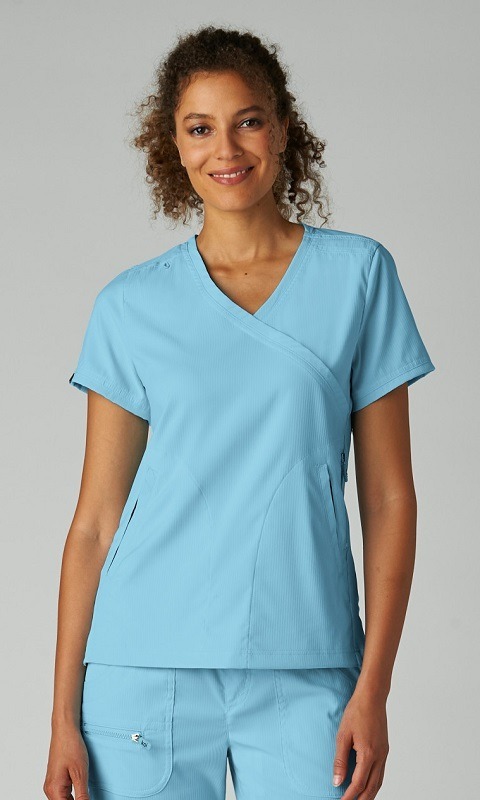
Philosophy koi Lite Women’s Wrap Scrub Top
R890.00 -

Reform koi Lite Women’s Scrub Top
R450.00 -

Force koi Lite Men’s Scrub Top
R190.00
For paediatric, GP, aesthetic, and vet nursing — printed scrubs
If your setting permits it, printed scrubs are an excellent choice. Research consistently shows patients — particularly children and anxious adults — respond more positively to approachable, colourful clinical uniforms. Koi’s printed range includes florals, animal prints, and bold patterns designed to hold their colour wash after wash.
Our Picks
-

Reform Rainbow Ombre koi Lite Women’s Scrub Top
R890.00 -

Ari Artists’ Series (Lady Leopard) Women’s Scrub Top
R690.00 -

Leslie koi Basics (Toothie) Printed Women’s Scrub Top
R690.00 -
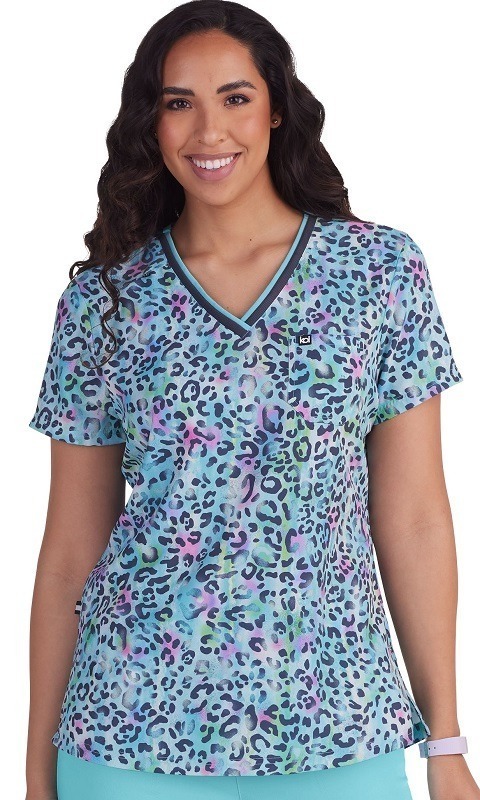
Coming On Strong koi Next Gen (Rainbow Leopard) Women’s Scrub Top
R690.00 -

On Call koi Next Gen Camo Men’s Scrub Top
R490.00
For theatre and procedure rooms — scrub caps
Complete the uniform properly. Koi’s scrub caps coordinate with the broader range and are available in both tie-back and bouffant styles. In theatre environments where scrub caps are required, a coordinated cap is the mark of a nurse who takes their uniform seriously.
Our Picks
-

koi Unisex Scrub Caps Black
R450.00 -

koi Unisex Scrub Caps Heather Grey
R450.00 -

koi Unisex Scrub Caps Navy
R450.00 -
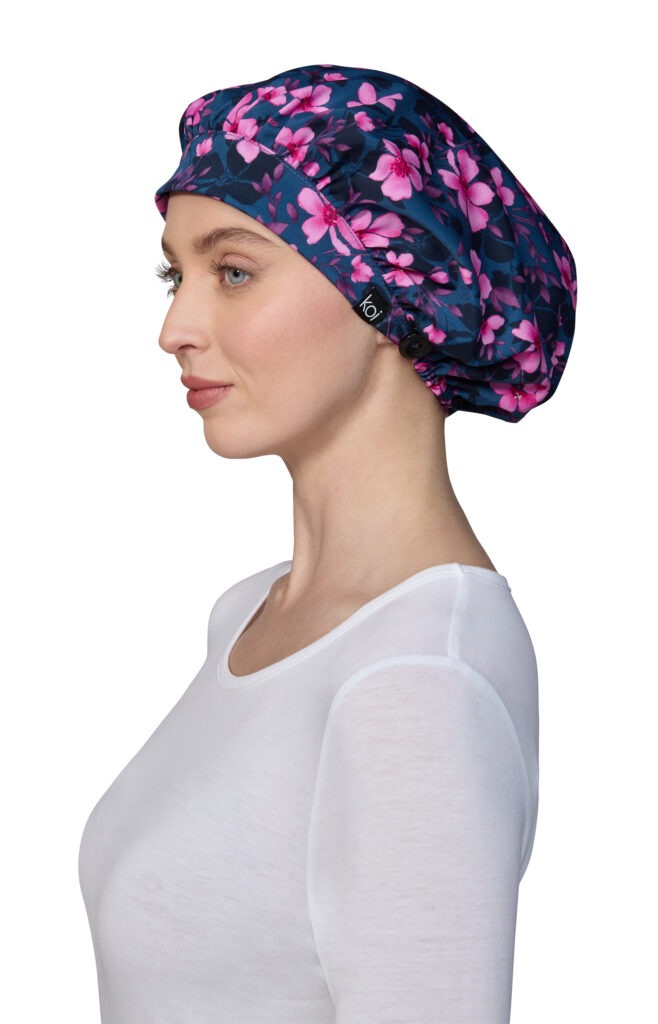
koi Bouffant Scrub Caps
R490.00
What to buy
Everyday ward & clinical work
Koi Basics and Koi Solis — durable, comfortable, wide colour range, built for daily clinical laundering without losing shape or colour.
Shop women’s scrubs →Shop men’s scrubs →High-heat or high-activity roles
Koi Lite — ultra-lightweight, active moisture management, four-way stretch. Noticeably cooler in hot wards and physically demanding environments.
Shop Koi Lite →Paediatric, GP & aesthetic nursing
Printed scrubs — patients respond more positively to approachable, colourful clinical uniforms. Koi’s prints hold their colour through rigorous washing.
Shop printed scrubs →Theatre & procedure rooms
Complete the uniform with a coordinating Koi scrub cap — available in tie-back and bouffant styles to suit every hair type and facility requirement.
Shop scrub caps →What to avoid
Nurse uniforms not worth your money
Cheap poly-cotton nursing dresses
The R165–R270 price point dominates the SA market and sounds attractive until the garment pills, shrinks, and fades after a month of daily clinical washing. The cost-per-wear is almost always higher than a quality scrub.
Temu and SHEIN “scrubs”
Not clinical garments. Costume-grade imitations made from materials not designed for healthcare environments or industrial washing — not colour-fast, not dimensionally stable, not appropriate for clinical wear.
Unverified Koi resellers
Grey-market resellers and social media stores are selling imitation Koi garments at slightly lower prices. Always purchase from Scrubsrx — South Africa’s exclusive authorised distributor — to guarantee authenticity and access to returns.
Ordering without checking the size chart
Koi uses US sizing — it doesn’t correspond to South African clothing sizes. Always check the women’s or men’s size chart before ordering. For team orders, use our Fitting Room in a Box.
Frequently Asked Questions
Shop nurse uniforms
Find your perfect nurse uniform
Premium Koi scrubs, locally stocked in KZN and delivered nationwide in 1–2 days. 100% authentic, inclusive sizing from XXS to 5XL.